From the Yardbirds to 18: Why We Love Jeff Beck, and the Designs That Match Each Era
In March 1965 a young guitarist from Wallington, Surrey, walked into the Yardbirds to replace Eric Clapton, on Jimmy Page's recommendation. He stayed about 20 months. What came after was nearly sixty years of records that never sat still: blues rock, hard rock, jazz fusion, instrumental rock and, late on, guitar bent through electronica.
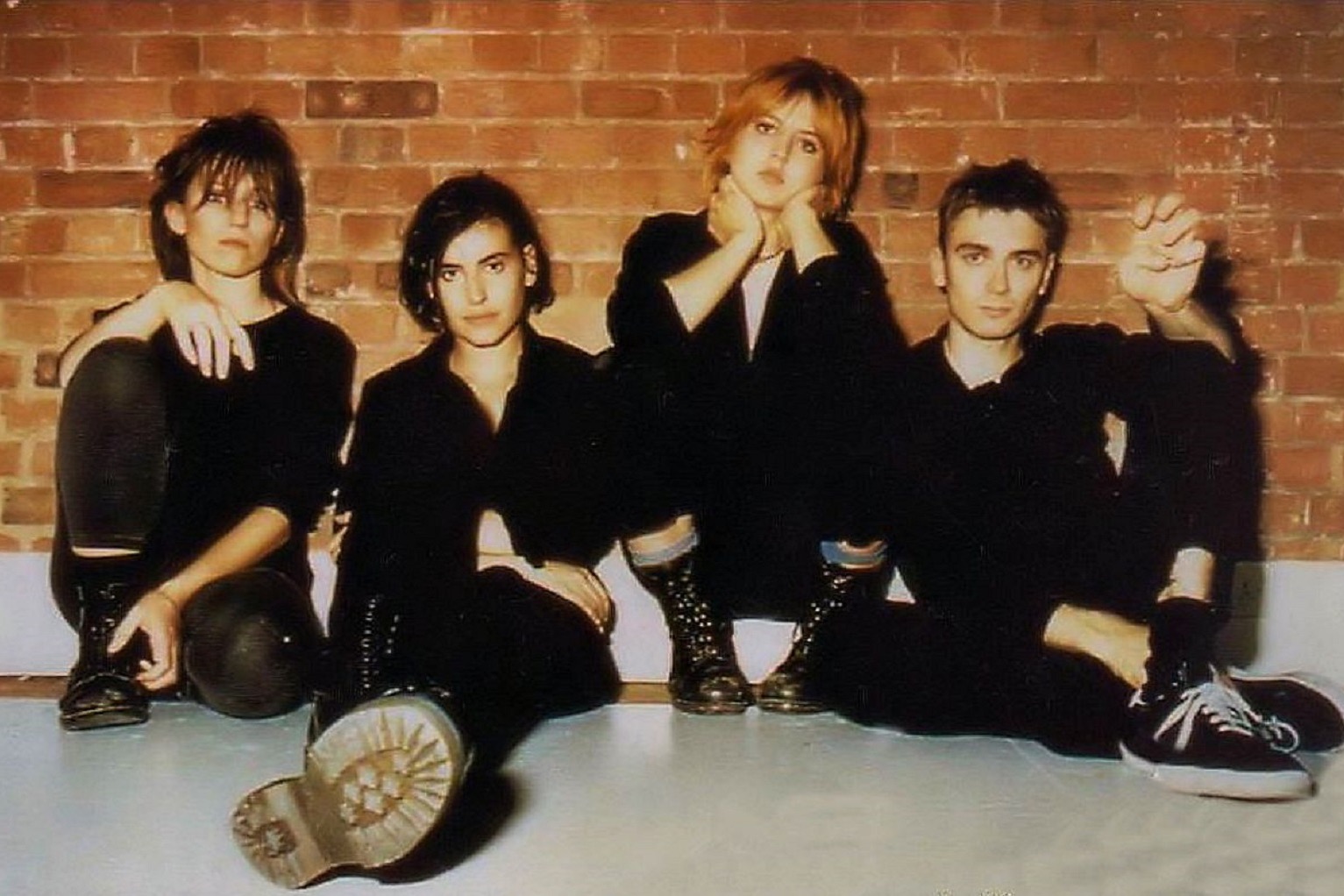
That guitarist was Jeff Beck, and we've been big fans of his for a long time. We're a London band that came up on punk, post-punk and new wave, so a man who kept tearing up his own sound every few years is easy for us to love. Here is his story told in four eras, with the Jeff Beck designs we'd pair with each one, so you can find the piece that matches the records you love most.
Where did it start?
With the Yardbirds. The one full album from Beck's time in the band is Roger the Engineer (1966), released in the US as Over Under Sideways Down. Jimmy Page joined in June 1966, and for a short spell the two shared the group.
Then came the Jeff Beck Group, and what a first line-up: Rod Stewart on vocals, Ronnie Wood on bass, Nicky Hopkins on piano, and a run of drummers from Aynsley Dunbar to Micky Waller to Tony Newman. Two albums, Truth in August 1968 and Beck-Ola in July 1969, and both still sound loud.
If this is your era, look at the Lightning Lettering design: Jeff Beck in jagged, bolt-shaped letters with a black-to-white halftone shade. It has the bite of late-sixties blues rock without spelling anything out. The Brick Wall design, Jeff Beck in dark red capitals over a broken red brick circle, is the other one we'd reach for.
What happened in the seventies?
A second Jeff Beck Group in 1971, with Bobby Tench, Max Middleton, Clive Chaman and Cozy Powell, made Rough and Ready (1971) and Jeff Beck Group (1972). Beck, Bogert & Appice released one studio album in 1973.
And then the big one. Blow by Blow came out in 1975, produced by George Martin, and reached No. 4. It became the most commercially successful release of his career, and it was an instrumental record. Wired followed in 1976, made with Narada Michael Walden and Jan Hammer. Those two albums took guitar into jazz fusion and showed you could fill a room without a singer.
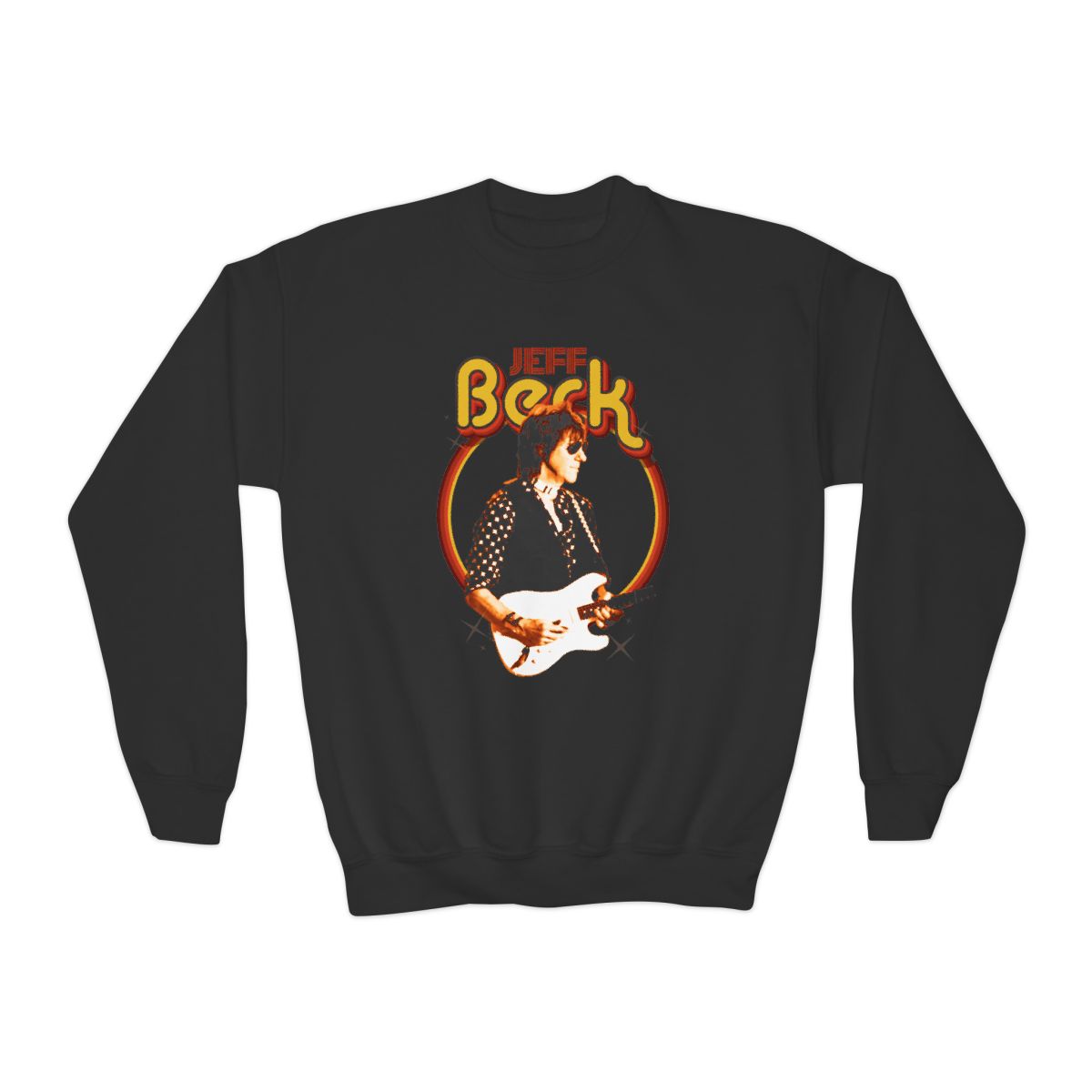
For this stretch there's only one pick for us: the Seventies Portrait design, a guitarist with a white guitar inside orange rings under rounded retro Jeff Beck lettering. It looks like it was lifted off a record shop wall, and the Jeff Beck Seventies Portrait youth crewneck is the one we'd hand to a young player just discovering those albums. The Aviators design, a bright red pop-art shape above aviator sunglasses with Jeff Beck on one lens, has the same sunny, wide-collared feel.
How did the sound keep changing?
This is the part we admire most. Plenty of guitarists find a sound and stay with it. Beck kept moving: There & Back (1980), Flash (1985), Jeff Beck's Guitar Shop (1989), then Who Else! (1999), You Had It Coming (2001) and Jeff (2003), where guitar rock met electronica.
The awards followed the work. His first Grammy came at the 1986 ceremony, for Best Rock Instrumental Performance for "Escape", and he went on to win eight Grammy Awards in all. He played a Fender Stratocaster from 1969, and Fender released a Jeff Beck Stratocaster model in 1991. He was inducted into the Rock and Roll Hall of Fame twice: with the Yardbirds in 1992, and as a solo artist on 4 April 2009.
The designs that fit this restless middle stretch are the guitar-first ones:
- Shattered Guitar: a gold electric guitar bursting through shattered glass under chrome Jeff Beck lettering. Big, bright and very loud.
- Katakana Guitarist: a teal and red guitarist with flying hair, Japanese lettering and Jeff Beck in heavy red italics.
- Crossing Signs: a cream guitar on a blue splash between two guitarist road signs under a Jeff Beck banner. Playful, and a good one for kids.
- Spark Plug: a tall grey spark plug drawn in flat shapes, with no words at all. For the person who'd rather wear a puzzle than a name.
And the later years?
Emotion & Commotion arrived in 2010 and Loud Hailer in 2016. In 2014 he received the Ivor Novello Award for Outstanding Contribution to British Music, and in 2015 Rolling Stone placed him at No. 5 on its list of the 100 greatest guitarists.
His last album was 18, made with Johnny Depp and released in 2022. The Johnny Depp 18 design marks it: a pencil-style drawing of two young men and a vintage microphone, with Jeff Beck, Johnny Depp and 18 written on it. The 2022 Tour design, a rust-red diamond badge with a winged guitar emblem, belongs to the same year.
Jeff Beck died on 10 January 2023, aged 78. The records are all still there, from Roger the Engineer to 18, and they reward anyone who starts at either end.
Which piece should you pick?
Start with the record you play most, and let the design follow:
- Love the sixties blues-rock sides? Lightning Lettering or Brick Wall.
- A Blow by Blow or Wired person? Seventies Portrait or Aviators.
- All about the guitar itself? Shattered Guitar, Green Telecaster or Katakana Guitarist.
- Want something quieter? The wordless Striped Circle, a red striped portrait of a guitarist inside two circles, or the Spark Plug.
- Here for the last chapter? Johnny Depp 18 or the 2022 Tour badge.
There's also a gentler pick for the season: the Christmas Knit Pattern design, on crewnecks and hoodies for adults and kids. Most of the designs above come as kids heavy cotton tees, and the youth hoodies and crewnecks carry several of them, so a family can share one favourite era between them.
We've always believed the best merch says what record you'd put on first. With Jeff Beck you're spoiled for choice: pick your era, pick your guitar, and wear it loud.